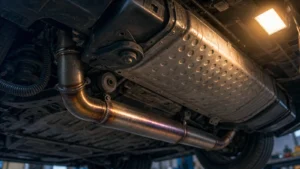
What does a smog pump do, and does a vehicle still need one? In short, it adds outside air to the exhaust so leftover fuel and carbon monoxide burn off before they reach the tailpipe. Below we explain how that works on classic belt-driven pumps and modern electric ones, where the system sits and why it matters.
On this page
- The short answer
- Why engines needed air injection
- How a classic belt-driven smog pump works
- How a modern electric secondary air pump works
- Belt-driven vs electric: side by side
- Where is the secondary air injection system located?
- Is a smog pump the same as EGR?
- Do smog pumps go bad, and is the pump necessary?
- Finding a smog pump for an older vehicle
- Frequently asked questions
The short answer
A smog pump blows fresh outside air into the hot exhaust. The extra oxygen lets unburned fuel and carbon monoxide keep burning before they leave the tailpipe, and on cars with a catalytic converter it helps the converter reach working temperature sooner. Mechanics also call it an air pump, an A.I.R. pump or a secondary air injection pump. The “secondary” part means the air goes into the exhaust, not into the engine.
Why engines needed air injection
When an engine is cold or running rich, some fuel leaves the cylinders unburned. Adding air while the exhaust is still very hot lets that fuel oxidize into carbon dioxide and water. HELLA notes that a catalytic converter only works well once it reaches roughly 300 to 350 °C, so the first minutes after a cold start produce a large share of a modern car’s emissions. Air injection attacks exactly that window.
The idea goes back to the mid-1960s. California’s Motor Vehicle Pollution Control Board approved General Motors’ “Air Injection Reactor” system and Ford’s “Thermactor” system for 1966 models, and a 1966 SAE paper by GM engineers describes A.I.R. on most 1966 GM cars and light trucks sold in California. Our air injection reactor history article covers that era in detail.
How a classic belt-driven smog pump works
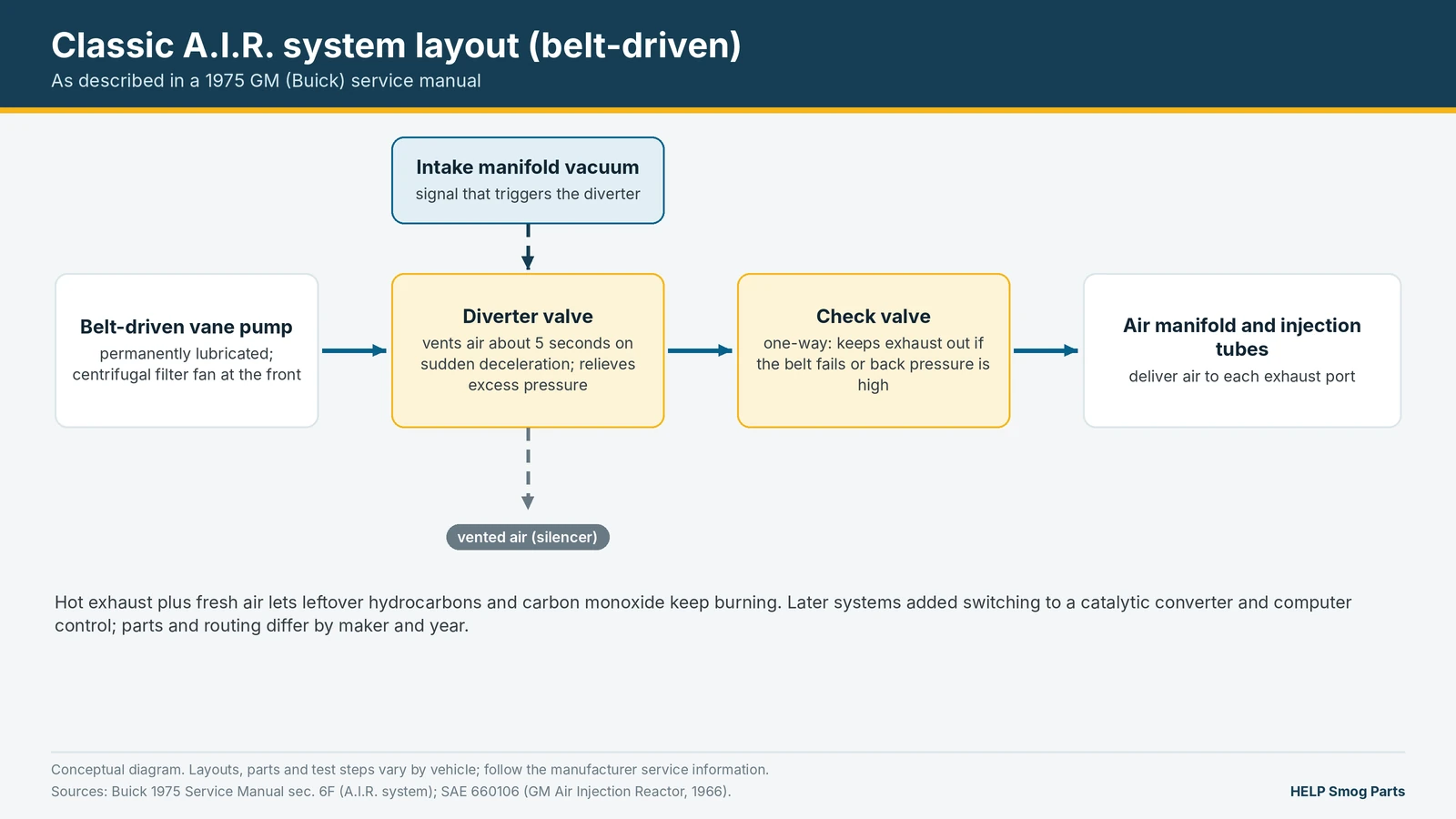
On older cars and trucks the pump is a belt-driven vane pump bolted to the front of the engine. A 1975 Buick service manual describes the system this way:
- The pump is permanently lubricated, with a centrifugal filter fan behind the pulley that keeps dirt out.
- A diverter valve senses intake manifold vacuum. On sudden deceleration it sends the air away from the exhaust for a few seconds to prevent backfire, and it relieves excess pressure.
- A one-way check valve keeps hot exhaust out of the hoses and pump if the belt breaks or back pressure is high.
- An air manifold and injection tubes deliver the air to each exhaust port.
Because the pump turns whenever the engine runs, the valves decide where the air goes. Not every older car used a pump: some used a pulse-air system that draws air in using exhaust pulses, and some engines met the rules with carburetor and ignition changes instead.
How a modern electric secondary air pump works
On many OBD II-era engines the pump is an electric blower that runs only for a short time after a cold start. Pierburg (MS Motorservice) describes the layout: air is drawn in behind the air filter and blown into the exhaust manifold just after the exhaust valves. A secondary air valve opens to let the air through and closes to keep exhaust gas and condensate away from the pump. The engine computer switches the pump through a relay or driver and checks the result with the oxygen sensors or a pressure or flow sensor.
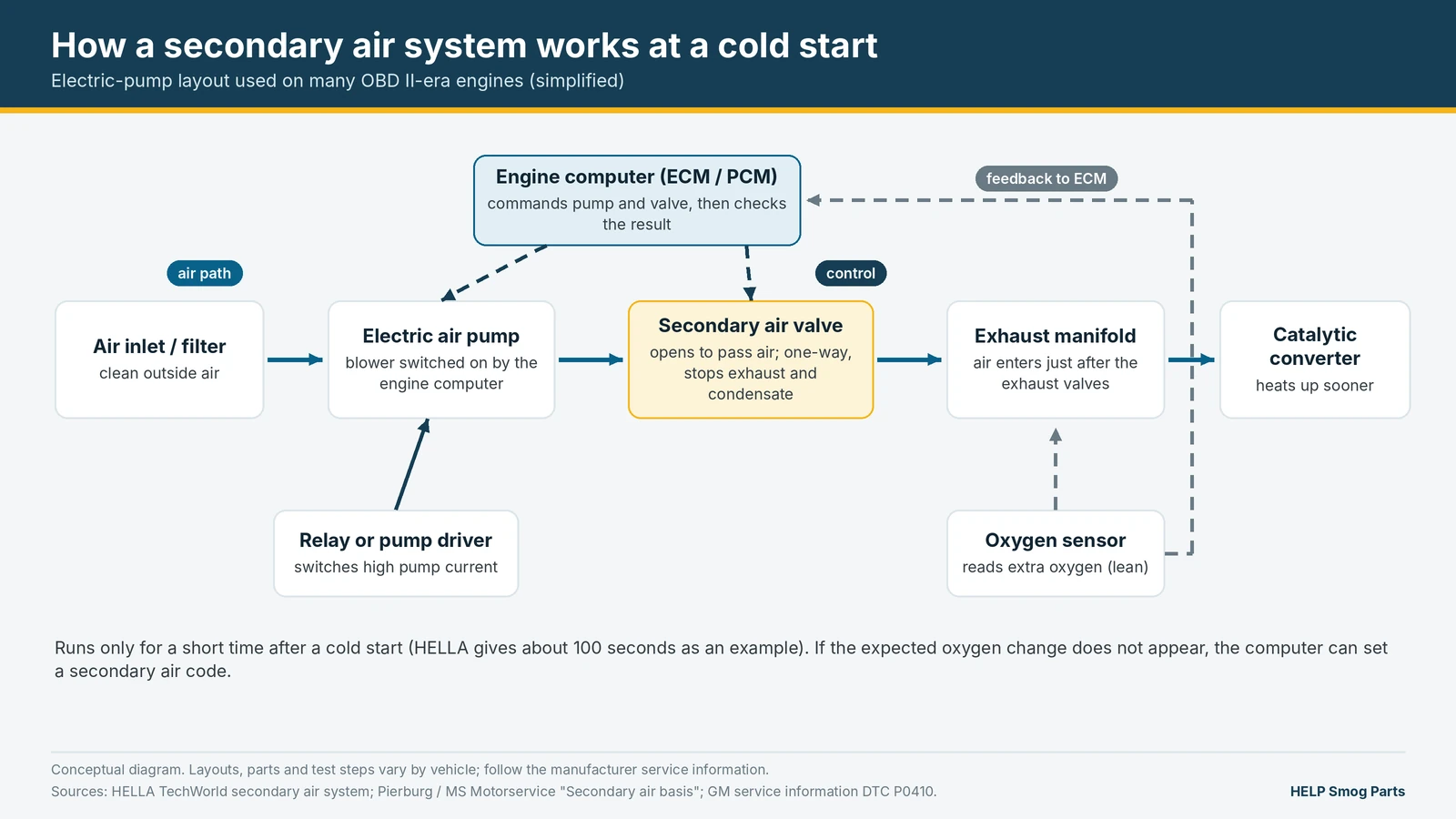
HELLA gives about 100 seconds as an example of how long the system runs; FenderBender, a trade magazine for repair shops, describes about a minute. The exact time and conditions are set by each manufacturer.
Belt-driven vs electric: side by side
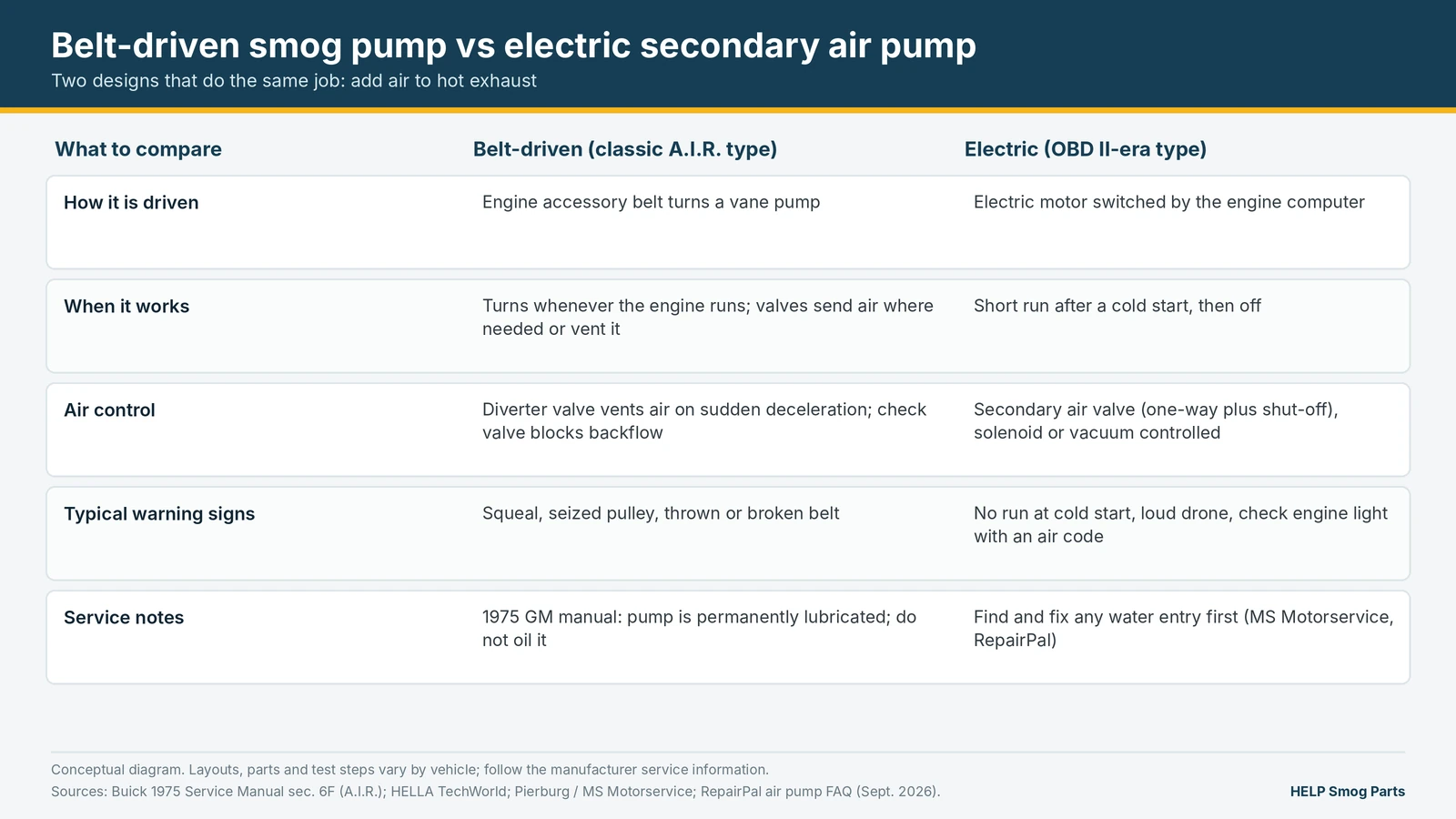
| Question | Belt-driven pump | Electric pump |
|---|---|---|
| When does it pump air? | Whenever the engine runs; valves route or vent it | Only for a short time after a cold start |
| What controls it? | Vacuum-operated diverter and check valves | Engine computer, relay or driver, secondary air valve |
| Typical failure | Seized bearings, squealing or thrown belt | No run at cold start, loud drone, water damage, air codes |
| Main source | 1975 Buick service manual (GM A.I.R.) | Pierburg / MS Motorservice; HELLA |
Where is the secondary air injection system located?
It depends on the vehicle. A belt-driven pump sits at the front of the engine with the other belt-driven accessories, with hoses or steel tubes running to the exhaust manifolds. Electric pumps are mounted wherever the maker found room: in the engine bay, behind a bumper or near a fender, with an intake from the air filter area. The valves sit close to the exhaust manifolds or cylinder heads. Check the service information for your vehicle before you start looking.
Is a smog pump the same as EGR?
No. Exhaust gas recirculation (EGR) sends a metered amount of exhaust back into the intake to lower combustion temperatures. A smog pump does the opposite job on the other side of the engine: it adds fresh air to the exhaust. Many vehicles have both, and both are emission controls that must stay in working order.
Do smog pumps go bad, and is the pump necessary?
They can fail. Belt-driven pumps wear out bearings or seize, which can break the drive belt. Electric pumps most often fail from water: trade sources say the water usually comes from exhaust condensate getting past a secondary air valve that no longer seals. Our guide to bad secondary air pump symptoms explains the signs, and the P0410 code guide covers the most common trouble code.
If your vehicle came with a smog pump, it is required equipment. California Vehicle Code 27156 requires required pollution control devices to be correctly installed and in operating condition, and the BAR Smog Check Manual treats a missing, disconnected or modified air injection system as a failure. “Smog pump delete” kits and eliminator brackets that you will see in search results are not legal for road use here.
Finding a smog pump for an older vehicle
Pumps for older and classic vehicles can be hard to find. HELP Smog Parts in Visalia catalogs smog pumps and other obsolete smog parts. Call 1-800-544-4357 with the year, make, model, engine and any part number cast or printed on your old pump, and we will check whether we list it.
Frequently asked questions
What does a smog pump do?
It blows fresh air into the hot exhaust so unburned fuel and carbon monoxide keep burning, which lowers tailpipe emissions and helps the catalytic converter warm up sooner.
Is a smog pump the same as a secondary air injection pump?
Yes. “Smog pump,” “air pump,” “A.I.R. pump” and “secondary air injection pump” all describe the pump that adds air to the exhaust. Older ones are usually belt-driven; newer ones are usually electric.
Does a smog pump run all the time?
A belt-driven pump turns whenever the engine runs, and valves decide where the air goes. An electric pump runs only for a short time after a cold start, as commanded by the engine computer.
Can I remove my smog pump?
Not on a road vehicle in California that came with one. Vehicle Code 27156 requires required emission equipment to be installed and working, and a missing or disconnected system fails the smog check.
Does a smog pump use a lot of horsepower?
An electric pump takes no power from the belt and runs only briefly. A belt-driven pump takes a small amount of engine power while it turns. Removing it is not a legal way to gain power on a California road vehicle.